
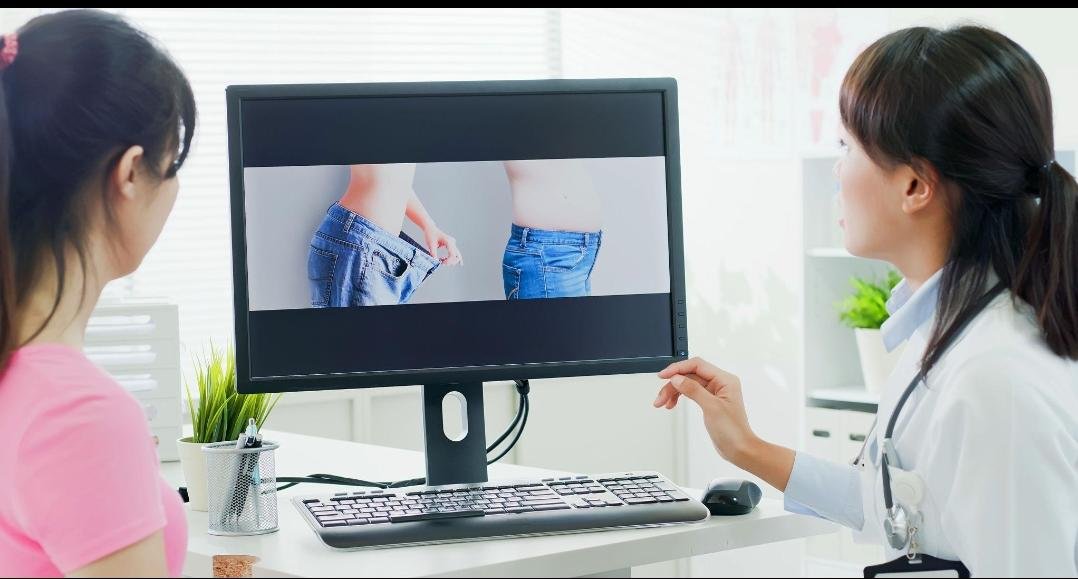
Quick Summary:
Traditional liposuction aims to reduce selected fat and create smoother regional contours. High-definition liposuction uses more deliberate superficial and deep contouring around muscular anatomy to make existing definition more visible. HD is not a shortcut to fitness, a weight-loss operation or automatically better. A suitable candidate generally needs stable weight, realistic muscle anatomy, favourable skin behaviour and acceptable medical risk; the exact technique matters less than safe selection and execution.
HD contouring highlights existing anatomy; traditional liposuction usually prioritises proportion and smooth transitions. Neither replaces weight management or removes major loose skin.
“High-definition” liposuction is often shown in sharply lit photographs with visible abdominal lines. Those images can make the procedure look like a more powerful version of ordinary liposuction. In reality, the goals differ. Traditional liposuction generally reduces selected fat and blends contours; HD techniques use deliberate superficial and deep removal around muscular landmarks to make existing anatomy easier to see.
Neither technique builds muscle, treats obesity or guarantees a photographed six-pack. Patient selection, total treatment extent, facility, anaesthesia and the surgeon’s control of depth matter more than the marketing label.
What does traditional liposuction aim to do?
Traditional liposuction removes selected subcutaneous fat through small access incisions using a cannula and suction. The goal is usually a smoother transition between areas such as the abdomen and flanks, thighs, arms, back, chest or under the chin. It does not remove visceral fat around internal organs and cannot spot-reduce through exercise-like metabolic change.
Good results depend on skin being able to redrape over the new contour. When skin is very loose, fat removal may expose more laxity. When abdominal wall separation or a hernia creates projection, removing fat does not correct the underlying structure.
What makes high-definition liposuction different?
HD contouring selectively preserves and reduces fat to emphasise borders and transitions around muscles. It may treat the central lines of the abdomen, lateral borders, chest or other athletic contours, depending on anatomy. Some techniques use ultrasound or another energy-assisted device, but a device name alone does not define an HD result.
Because superficial work is visible through the skin, small irregularities, over-etching, fibrosis, adhesion or asymmetry can be noticeable. The method requires conservative planning around natural anatomy; drawing an idealised six-pack that the patient’s muscles do not support can look artificial.
What does current evidence say about candidates?
A 2026 systematic review and meta-analysis of HD liposuction included thousands of patients but found that candidate definitions and reporting varied. Many included studies used body-mass thresholds and excluded poorly controlled diabetes, heavy smoking and thromboembolic history. The authors could not establish one evidence-based ideal candidate profile.
That uncertainty is important. It supports a cautious assessment of stable weight, skin quality, muscle development, fat pattern, health and expectations rather than an online BMI cut-off. Pooled complication figures from selected studies cannot predict one patient’s risk or prove that every clinic’s technique is equivalent.
HD versus traditional liposuction
| Planning point | Traditional liposuction | High-definition liposuction |
|---|---|---|
| Primary goal | Reduce localised fat and smooth proportions | Reveal selected muscular contours |
| Muscle requirement | Does not depend on a visible athletic pattern to the same degree | Works with existing anatomy; cannot create muscle |
| Skin quality | Important for redraping | Especially important because detail shows through the skin |
| Technical depth | Often prioritises even deeper contouring and blending | May add deliberate superficial etching and transition work |
| Risk of visible irregularity | Present with any liposuction | Over- or under-definition may be more apparent |
| Best outcome description | Improved proportion, not weight loss | More visible definition, not a guaranteed six-pack |
How skin, muscle and weight change the discussion
A person with stable weight, developed musculature, localised fat and firm skin may have anatomy compatible with HD goals. Someone with large weight fluctuation, major skin excess, limited muscle definition or central visceral fat may not obtain the result shown in promotional photographs even if fat can be removed safely.
Women and men can both be assessed, but the desired pattern should not be imposed from a gender template. Some patients want subtle waist or torso refinement rather than sharp lines. The surgeon should mark the plan standing and explain how movement, posture and lighting will affect what is visible.
Why neither procedure is weight-loss treatment
Liposuction removes a limited amount of subcutaneous fat for contour. It does not treat metabolic disease or replace sustainable nutrition, physical activity or medical weight care. Chasing a larger aspirate is not a measure of quality and can increase fluid, anaesthetic and clot-related concerns.
If weight is still changing, postponing contour surgery may make the result easier to plan and preserve. A medical weight-management referral is not a rejection; it may be the most useful first step when health and overall fat distribution are the main concerns.
Questions about technology, anaesthesia and facility
Ask which cannula technique or energy device will be used, why it is appropriate and whether burns, fluid shifts or longer operating time are relevant. Product clearance in another country does not establish local availability or competence. The operator’s training and the facility’s emergency capacity matter.
The anaesthetic plan should reflect total areas, duration and health—not the cheapest package. Confirm who provides anaesthesia, where surgery occurs, how fluid and temperature are monitored, whether an overnight stay is possible and which hospital receives an emergency transfer.
Recovery is shaped by extent, not the word HD
Bruising, swelling, drainage from access sites, tightness, altered sensation and fatigue can occur. Compression garments may be advised, and some techniques use structured massage or lymphatic care. These measures should follow the operating team’s instructions; aggressive massage on an unassessed fluid collection can be harmful.
Early definition is not the final result. Swelling, firmness and fibrosis evolve for weeks to months. Desk work, manual work, gym training and travel have different demands. Ask for written milestones and plan enough time in Lahore for early review if travelling.
Risks and warning signs
Risks include anaesthesia complications, bleeding, infection, fluid collection, burns with some devices, contour irregularity, asymmetry, skin injury, altered sensation, persistent swelling, fat embolism, fluid imbalance, clots and revision. Circumferential or combined operations can increase scope and deserve separate consent.
Rapid swelling, severe or escalating pain, fever, spreading redness, dark or blistered skin, foul drainage or worsening weakness needs prompt review. Calf swelling, chest pain, breathlessness, confusion or fainting requires urgent medical care rather than a clinic message.
Cost and value questions in Pakistan
No fixed HD or traditional liposuction fee was supplied. Cost can change with treated areas, superficial detail, technology, operating time, surgeon, facility, anaesthesia, garments, medicines and follow-up. A higher HD price does not prove a better outcome, and a low per-area price may omit important components.
Compare the actual treatment map, surgeon, facility, anaesthesia, aftercare and complication policy. Ask whether revisions for under- or over-definition are included. The supplied PKR 3,000 consultation fee is subject to confirmation and is separate from the operation quote.
A seven-question candidate checklist
- Is my main concern localised fat, skin, visceral fullness or muscle definition?
- What existing anatomy can realistically become more visible?
- Would standard contouring produce a smoother result for my goals?
- Which device and depth are planned, and what risks do they add?
- How many areas and how long an operation are proposed?
- What garment, massage, work, exercise and travel plan applies?
- What exactly is included in the itemised quote?
A suitable candidate is not someone who wants the most definition. It is someone whose anatomy, health, expectations and recovery support match a carefully described plan.
Practice context supplied by Dr. Saima: Dr. Saima offers liposuction and HD liposuction assessment in Lahore. The client has not supplied a universal HD technique, technology brand, candidate threshold, recovery schedule or price. These must be confirmed after examination; the client-supplied consultation fee is PKR 3,000, subject to confirmation at booking.
Frequently asked questions
What is the main difference between HD and traditional liposuction?
Traditional liposuction usually focuses on reducing localised fat and creating smooth proportions. HD techniques intentionally contour around muscle borders to reveal definition. The labels are not a guarantee of technology, depth or quality; ask the surgeon to describe the actual operative plan.
Do I need visible muscles before HD liposuction?
The procedure can only reveal anatomy that exists and is compatible with the skin and fat layer. It cannot build muscle. A stable exercise pattern, realistic anatomy and favourable skin behaviour often make definition more predictable, but only examination can assess suitability.
Is HD liposuction safer than normal liposuction?
It is not automatically safer. More detailed superficial contouring may add risks such as irregularity, burns with some energy devices, prolonged swelling or fibrosis. Total treatment extent, anaesthesia, facility, surgeon and patient health strongly affect safety.
Can HD liposuction give me six-pack abs?
No ethical surgeon can guarantee that result. The operation may accentuate selected muscular lines, but skin thickness, muscle anatomy, fat distribution, healing, weight and lighting all affect visibility. It does not replace muscle development or nutrition.
Does HD liposuction tighten loose skin?
Some skin retraction may occur, but neither HD nor traditional liposuction reliably removes substantial skin excess. Detailed etching beneath loose skin can make laxity or irregularity more obvious. Excisional surgery may be discussed when skin is the main problem.
Is recovery longer after HD liposuction?
It can involve more swelling, garment use, massage or follow-up depending on the technique and extent, but there is no universal comparison. Ask for written milestones tied to your areas, work, travel and the specific device or method.
How much does HD liposuction cost in Pakistan?
No verified universal price applies. The quote depends on areas, circumferential work, complexity, duration, technology, surgeon, facility, anaesthesia, garments and aftercare. A premium label does not prove a safer or better plan; obtain an itemised quote.
Turn an online question into a personal surgical assessment
Bring unedited photographs only as a record of your own body changes, not as a guarantee target. Share weight history, exercise pattern, skin laxity, pregnancies, scars, medical conditions, nicotine, medicines and clot history. Ask what contour is being planned, how superficial work changes risk and what would remain unchanged.
Related reading and next steps
- Liposuction cost in Pakistan
- Liposuction versus tummy tuck
- Mommy makeover in Pakistan
- HD liposuction service
- Liposuction service
- View the transformation gallery
- About Dr. Saima Waris
- Planning treatment travel to Lahore
Sources and evidence
Medical and regulatory claims were checked against the following professional, government or peer-reviewed sources.
Consultations in Lahore
Two clinic locations, one practice team.
Call or WhatsApp before travelling to confirm the appropriate clinic and current appointment availability.

Medical reviewer
Dr. Saima Waris
MBBS · FCPS (Plastic Surgery) · PMDC 47804-P
Plastic and cosmetic surgeon in Lahore. Articles in this patient-education library are medically reviewed for clinical accuracy, limitations and patient safety.
View Dr. Saima’s profile