
Quick Summary
Labiaplasty reshapes or reduces selected labial tissue using a technique chosen for anatomy and goals; the aim should be functional or proportionate change rather than a single “normal” appearance. Suitability is assessed in consultation rather than from photographs or a treatment name alone.

Medically reviewed by Dr. Saima Waris
Plastic & Cosmetic Surgeon in Lahore · MBBS · FCPS (Plastic Surgery) · PMDC 47804-P
Overview
What is Labiaplasty?
Labiaplasty reshapes or reduces selected labial tissue using a technique chosen for anatomy and goals; the aim should be functional or proportionate change rather than a single “normal” appearance. The purpose of assessment is to identify the exact problem being treated and to separate what the procedure can change from what it cannot change.
People usually ask about this treatment because of labial discomfort, asymmetry or a persistent personal concern about tissue size or shape after normal anatomical variation has been discussed. Treatment planning should use proportion, function and realistic expectations rather than a fixed aesthetic template.
Suitability
Who may be suitable—and who may need another plan?
A typical suitability discussion considers whether the concern is genuinely appropriate for this treatment. Adults making a voluntary, informed decision who understand the wide range of normal vulval anatomy and the risks to sensation, scarring and sexual comfort.
Medical history, current medicines and supplements, allergies, smoking or nicotine exposure, previous procedures and relevant health conditions should be reviewed. It is also important that the decision is voluntary and that expectations are specific rather than based on achieving perfection or copying another person’s result.
Assessment
What should happen during consultation?
Consultation should clarify the exact concern, examine the relevant anatomy and explain why labiaplasty is or is not a reasonable option. Photographs or measurements may be used where clinically useful.
Useful questions include what the treatment is expected to change, what will remain unchanged, the main risks, the expected recovery, alternatives, what would make the surgeon advise against treatment, and how complications or dissatisfaction are handled.
Treatment planning
The technique is selected after assessment.
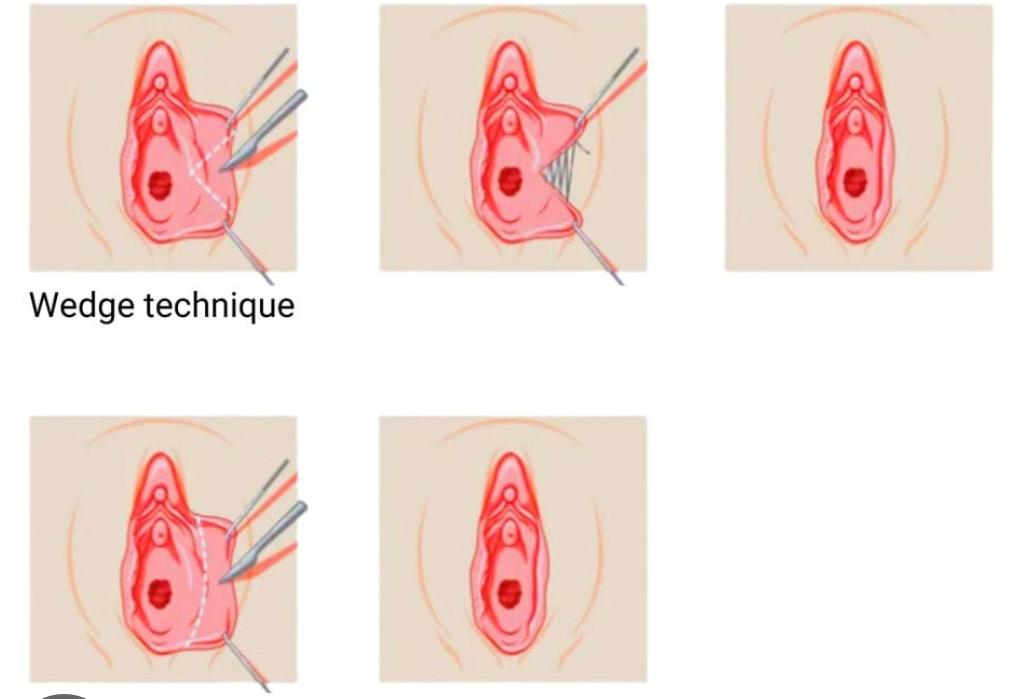
The procedure plan is individualized. In general, this treatment reshapes or reduces selected labial tissue using a technique chosen for anatomy and goals; the aim should be functional or proportionate change rather than a single “normal” appearance. The exact technique should follow examination and should not be assumed from a generic web description.
Normal labial anatomy varies widely. Surgery should never be presented as necessary to meet a cosmetic ideal.
Expectations
What Labiaplasty can—and cannot—be expected to change
Labiaplasty should be judged by whether it addresses the specific concern discussed in consultation, not by whether it produces a fashionable or copied appearance. Anatomy, tissue quality, previous treatment and healing can all change what is realistic for Vulva / labia.
A useful plan also defines what the treatment is not expected to change. That boundary is important because dissatisfaction often comes from expecting one procedure to solve a different structural, skin, volume or functional problem.
Preparation
Prepare for the treatment, not just the appointment.
Confidential intimate-care consultation should begin with the patient’s own concern, medical and obstetric history where relevant, symptoms, expectations and the reason treatment is being considered. No procedure should be presented as medically necessary solely because of social, relationship or appearance pressure.
Preparation and consent should cover hygiene, medicines, smoking or nicotine, menstrual or pregnancy considerations where relevant, sexual activity, support at home and the possibility that examination may show a different or no treatment is more appropriate.
Patient journey
A clear sequence from consultation to follow-up
- 01ConsultationClarify the concern, history and realistic options.
- 02PlanAgree treatment, preparation, costs and consent.
- 03TreatmentFollow the individualized clinical plan.
- 04RecoveryUse the procedure-specific aftercare instructions.
- 05ReviewAssess healing, results and any ongoing needs.
Recovery
Plan the recovery before the procedure.
Swelling and tenderness can be significant early on; exercise, cycling, intercourse and tampon use are restricted until healing is secure.
Recovery instructions are procedure-specific. Patients should know which symptoms are expected, which activities are restricted, when follow-up is planned and which warning signs require urgent contact. Travel should be coordinated around the safe follow-up window rather than assumed in advance.
Aftercare can include swelling, discomfort, hygiene measures and temporary restrictions on exercise or sexual activity. The exact instructions and timing depend on the procedure and healing, and should be given privately and clearly before treatment.
Patients should know how to contact the clinical team if pain, bleeding, swelling, discharge, fever, wound concerns or urinary symptoms are more than expected. Embarrassment should never delay seeking medical advice.
Safety
Risks and limitations to discuss
All procedures have risks. The relevant risks depend on the treatment, your health and the technique selected. Important possibilities include:
- Bleeding
- Infection
- Wound separation
- Scarring
- Asymmetry
- Over- or under-resection
- Altered sensation
- Persistent pain or pain with intercourse
- Need for revision
Alternatives
What are the alternatives?
No surgery, clothing or activity changes for friction symptoms, and assessment for dermatologic or pelvic-floor causes of discomfort may be alternatives.
A consultation should compare the expected degree and duration of change, recovery, cost and risk of each reasonable option—including doing nothing.
Results in context
Practice imagery
Examples cannot predict an individual result. Anatomy, treatment extent and healing differ between people.

Cost
How is the price decided?
The clinic consultation fee is PKR 3,000. The procedure price is not presented as a fixed package before assessment because it can depend on treatment extent, facility requirements, anaesthesia where applicable, consumables and follow-up needs.
Travelling to Lahore
Plan travel around your Labiaplasty care
If you are travelling to Lahore for Labiaplasty, confirm the assessment, treatment setting, expected follow-up and safe travel window before booking inflexible transport. The number and timing of in-person reviews depend on the treatment and on how you are healing.
Consult in Lahore
Two consultation locations
Cosmetic Surgical Institute & Clinic
158-A Shah Jamal Rd, Fazlia Colony, Lahore 54000
Monday & Friday · 5:00 PM–7:00 PMGet directionsPink Perfect Clinic
439, Commercial Block J, EME Sector, DHA Phase 12, Lahore 53710
Tuesday, Wednesday & Thursday · 7:00 PM–9:00 PMGet directionsBring these questions
Five useful questions for your consultation
- What exact finding are we treating, and what will remain unchanged?
- What are the most important risks in my situation?
- What alternatives—including no treatment—should I compare?
- What recovery, aftercare and follow-up will I realistically need?
- What would make you advise me to postpone or avoid this treatment?
Frequently asked questions
Labiaplasty FAQs
Am I a good candidate for labiaplasty?
Suitability depends on the actual concern, anatomy, general health, previous treatment and expectations. A web page cannot determine candidacy; this requires an in-person clinical assessment.
How much recovery time should I plan?
Swelling and tenderness can be significant early on; exercise, cycling, intercourse and tampon use are restricted until healing is secure. Your own timeline can be shorter or longer depending on treatment extent and healing.
When will I see the final result?
Early swelling or treatment effects can make the result look different from the settled outcome. The time to final assessment depends on the procedure and individual healing, so the surgeon should give a procedure-specific timeline.
Are results guaranteed?
No. Anatomy, tissue quality, healing, age, health, treatment scope and aftercare vary between people. Before-and-after examples are educational and cannot predict an individual result.
How is the price decided?
A final treatment price is discussed after assessment because complexity, facility or anaesthesia needs, consumables and follow-up can vary. The consultation fee is PKR 3,000.
Can I travel to Lahore for treatment?
Many patients travel for consultation or treatment, but the timing of tests, procedure, support, follow-up and safe travel home depends on the treatment. Confirm the plan before buying inflexible tickets.
Sources & review
Evidence and medical review
This patient guide uses established patient information from the sources below for general concepts, risks and recovery, and has been medically reviewed by Dr. Saima Waris.