
Quick Summary:
Hairline-lowering surgery shortens the visible forehead by removing a strip of forehead skin and advancing the hair-bearing scalp, leaving a scar at the new hairline. A hair transplant redistributes a finite supply of donor follicles to build or reshape a hairline; growth takes months and density may need more than one session. A naturally high but stable dense hairline may fit advancement, while recession or thinning often shifts the discussion toward hair-loss assessment and transplantation. Scalp mobility, future loss and scar tolerance are decisive.
One procedure moves the existing hairline and creates an anterior scar; the other redistributes donor follicles over time. Stable hair and future loss matter as much as forehead height.
A high hairline can be natural and stable, or it can reflect progressive recession, traction, hormonal change or another cause of hair loss. Forehead-reduction surgery and hair transplantation can both move the visible boundary lower, but they do so in opposite ways. One advances existing scalp; the other redistributes a limited supply of follicles.
The choice depends on more than the desired centimetres. Scalp mobility, hair density, hair-loss stability, donor supply, forehead scar tolerance and long-term hairline design determine whether either operation makes sense.
First determine why the hairline looks high
A naturally high forehead may have dense hair that has remained stable for years. Pattern hair loss produces recession or thinning that may continue after surgery. Tight hairstyles can cause traction loss, while postpartum shedding, nutritional problems, scalp inflammation, medicines and endocrine conditions can change density.
Bring photographs from several years and a family history. Sudden, patchy, painful or inflamed loss needs medical or dermatology assessment before cosmetic surgery. An operation that lowers today’s line without planning for tomorrow’s loss can expose scars or create an isolated band of transplanted hair.
How forehead reduction or hairline lowering works
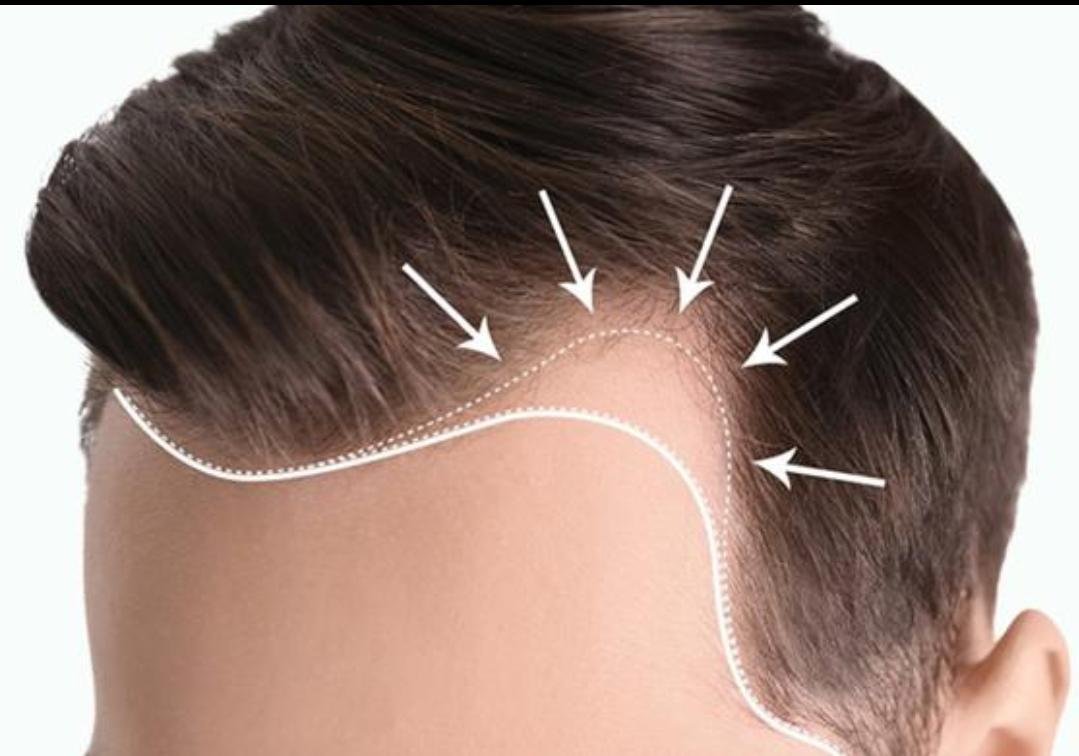
Hairline-lowering surgery places an incision at the planned new boundary, removes selected upper-forehead skin and advances the hair-bearing scalp forward. The visual change is immediate, although swelling and scar maturation take time. The amount of movement is limited by scalp laxity, blood supply and safe closure tension.
It preserves the density of the advanced native hairline but creates a permanent anterior scar. Temporary or permanent numbness, hair shedding near the incision, widened scar, asymmetry, infection and later exposure if hair recedes are relevant risks.
How hair transplantation lowers or reshapes a hairline
Hair transplantation removes follicular units from a donor area, commonly by follicular unit excision or a strip method, and places them into a designed frontal zone. It does not move the scalp or remove forehead skin. The procedure creates tiny recipient sites and donor scars.
Transplanted hairs commonly shed before new growth develops. Density matures over months and may require more than one session. Donor follicles are finite, so using many grafts to fill a large lowering zone must be balanced against future recession or crown loss.
Forehead reduction versus hair transplant
| Decision point | Forehead reduction | Hair transplant |
|---|---|---|
| Mechanism | Advances existing hair-bearing scalp | Moves follicles from donor to recipient sites |
| Best-fit pattern | Often stable dense hairline with mobile scalp | Hairline recession, shape or density concern with adequate donor supply |
| Timing of visible change | Position changes immediately; scar settles over months | Growth develops gradually over months |
| Scar | Line at the new anterior hairline | Linear or dot donor scars plus recipient sites |
| Density | Moves existing density forward | Depends on graft number, survival and calibre |
| Future loss | May expose the incision | May leave transplanted hairs beside thinning native hair |
Why scalp mobility matters
A surgeon assesses how far the scalp can advance without excessive tension and whether tissue expansion or another strategy is ever appropriate. A fixed distance advertised online is not transferable to another person’s anatomy. Research on anchoring techniques studies stability, but no paper guarantees an individual advancement or scar.
High tension can widen a scar or affect hair around it. Conservative movement may be safer than chasing a facial proportion rule. Facial thirds are design references, not mandatory measurements for every ethnicity, gender or personal identity.
Hairline design must age well
A very low, straight or dense line may look unnatural if future recession occurs. Irregular micro-contours, temporal shape, direction and calibre of hair influence a transplanted result. Surgical advancement carries the patient’s existing front edge, which can look natural but may not correct recessed temples.
Men with progressive androgenetic loss and women with diffuse thinning need especially careful long-term planning. Medical hair-loss options should be discussed with an appropriate clinician; do not start or stop prescription treatment from a cosmetic web page.
Hair styling preferences are practical evidence too. A patient who regularly wears the hair pulled back may be more aware of an anterior scar; someone who keeps the donor hair very short may see dot or linear donor scars. Discuss hairstyles, cultural head coverings, workplace expectations and the ability to protect healing skin from sun. These details do not decide candidacy, but they change whether the trade-off feels acceptable in daily life.
Can the procedures be combined?
Selected patients may use transplantation later to soften an advancement scar or refine temples. Others may combine or stage the methods when one cannot safely achieve the whole design. That does not make combination automatically superior.
Staging allows the scar, shedding and new hairline position to settle before donor grafts are committed. Ask how many grafts the combined plan saves or uses and how future loss will be managed.
Recovery and when results can be judged
After advancement, swelling, bruising, tightness, numbness and crusting around the incision may occur. Sutures or staples and wound checks follow the surgeon’s plan. Scar colour and nearby hair growth change for many months.
After transplantation, crusts, redness, donor soreness and temporary shedding are expected to varying degrees. New growth is delayed and texture matures gradually. Return-to-work decisions depend on visibility, job and wound care, not only pain.
Risks and realistic limitations
Hairline lowering risks include bleeding, infection, wound problems, visible or widened scar, asymmetry, numbness, shock loss, altered hair direction and revision. Hair transplantation risks include bleeding, infection, donor scarring, poor graft survival, unnatural design, cysts, numbness, ongoing native loss and repeat surgery.
Increasing pain, fever, spreading redness, foul drainage, wound opening or dark skin needs prompt assessment. Sudden patchy shedding months later, scalp inflammation or new systemic symptoms should not be self-treated with unregulated products.
How cost is calculated in Pakistan
Forehead reduction cost reflects surgeon, operating facility, anaesthesia, complexity and aftercare. Hair transplantation may be quoted by graft count, session or technique, but the team, donor management and long-term plan matter more than the cheapest per-graft number.
No prices were supplied for this article. Ask for the operation or estimated graft range, donor method, facility, medicines, follow-up, revision policy and taxes or extras in writing. The client-supplied consultation fee is PKR 3,000, subject to confirmation.
Questions to take to consultation
- Is my hairline naturally high, stable or actively receding?
- Does any hair loss need medical assessment first?
- How mobile is my scalp and what advancement is safely realistic?
- Where would the scar sit and how could future loss expose it?
- How many donor grafts are available for present and future needs?
- Would one procedure, staged combination or observation fit best?
- What is included in the written quote and follow-up?
The better operation is the one that respects both today’s facial balance and the hairline the patient may have years later.
Practice context supplied by Dr. Saima: Dr. Saima’s website lists forehead reduction and hair-transplantation services. The client has not supplied a standard advancement distance, graft number, donor method, recovery promise or price. Dr. Saima must examine hair-loss stability, scalp mobility, donor supply, hairline design and scar risk before confirming either option.
Frequently asked questions
What is forehead reduction for a high hairline?
Also called hairline lowering or scalp advancement, it removes selected upper-forehead skin and moves the hair-bearing scalp forward. It creates an incision at the new hairline and depends on scalp mobility, hair density and a stable pattern.
Does a hair transplant lower the hairline immediately?
No. Grafts are placed during surgery, but the transplanted hairs commonly shed before new growth develops over months. Density and maturation take time, and more than one session may be needed.
Which option is better if my hairline is receding?
Progressive recession makes a visible advancement scar and future mismatch more concerning. The cause and stability of hair loss, donor supply and medical treatment options should be assessed before either procedure. A transplant also does not stop future loss.
Will the forehead-reduction scar be invisible?
No scar can be promised invisible. Hair may help camouflage a well-planned hairline incision, but width, colour, hair loss, tension and healing vary. A later transplant may sometimes be discussed for camouflage, but it is not guaranteed.
How many grafts are needed to lower a hairline?
The number depends on the size and shape of the area, desired density, hair calibre, curl, colour contrast and donor supply. A graft quote without examination and a long-term hair-loss plan can be misleading.
Can forehead reduction and a hair transplant be combined?
They may be staged or combined in selected plans, but doing both adds cost, donor use and healing considerations. The surgeon should explain why one procedure alone is insufficient and how the scar and future loss will be managed.
How much do forehead reduction and hair transplantation cost in Pakistan?
They are priced from different inputs: advancement complexity and facility for one, and graft method, number and team time for the other. No fixed prices were supplied for this article. Obtain a plan-specific, itemised quote after assessment.
Turn an online question into a personal surgical assessment
Bring photographs showing the hairline over several years and a family history of hair loss. Share hairstyles or traction, pregnancy-related shedding, illness, medicines, scalp disease, prior transplant and scar tendency. Ask whether current loss needs dermatology or medical assessment before any irreversible hairline change.
Related reading and next steps
- Eyebrow transplantation
- Beard transplantation
- First consultation walkthrough
- Forehead reduction service
- Hair transplantation service
- View the transformation gallery
- About Dr. Saima Waris
- Planning treatment travel to Lahore
Sources and evidence
Medical and regulatory claims were checked against the following professional, government or peer-reviewed sources.
Consultations in Lahore
Two clinic locations, one practice team.
Call or WhatsApp before travelling to confirm the appropriate clinic and current appointment availability.

Medical reviewer
Dr. Saima Waris
MBBS · FCPS (Plastic Surgery) · PMDC 47804-P
Plastic and cosmetic surgeon in Lahore. Articles in this patient-education library are medically reviewed for clinical accuracy, limitations and patient safety.
View Dr. Saima’s profile