
Quick Summary:
A beard transplant moves follicles—usually from a suitable scalp donor area—into planned facial-hair zones. The difficult part is not drawing a beard in a front-view photograph. It is matching facial proportions, natural boundaries, hair calibre and curl, and placing grafts at very shallow, changing angles across the moustache, goatee, cheek and sideburn. Donor supply is finite, growth varies and scalp-derived hair can retain scalp characteristics. A safe plan defines the design, graft range, donor trade-off, scars, aftercare and total quote without promising an instant or 100%-growing beard.
Natural facial hair changes direction and density by zone; design, exit angle, donor match and future grooming matter as much as graft count.
A beard transplant is often sold as a number of grafts placed inside a drawn outline. Natural facial hair is more complex. Moustache hairs, goatee hairs, cheek hairs, connectors and sideburns differ in density, calibre and direction. They emerge at very shallow angles and move with speech and expression.
A strong plan starts with the patient’s face and existing pattern, not a copied celebrity beard. It must also account for the donor area, because moving scalp follicles changes both the face and the back or sides of the scalp.
Define the actual goal
Some patients want to strengthen a moustache or goatee, connect existing zones, lower patch contrast, rebuild a sideburn or camouflage a stable facial scar. Others want a full cheek pattern where little hair exists. These goals need different graft ranges and design boundaries.
Grow the existing beard before consultation if possible. Photographs of natural growth show density, curl and direction that a clean-shaven visit may hide. If facial hair is unexpectedly absent alongside developmental, hormonal or health concerns, appropriate medical evaluation may be more useful than immediate transplantation.
Design must work from every angle
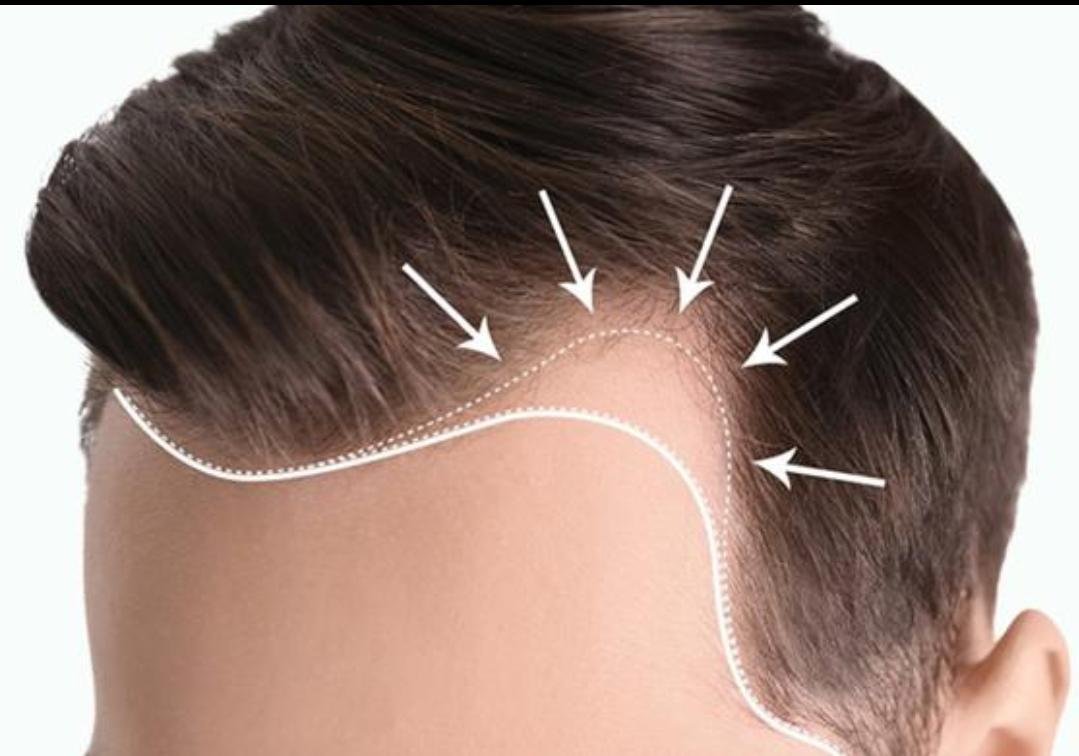
The cheek boundary should relate to the nose, mouth, jaw, sideburn and existing follicles. A perfectly straight, high line can look artificial. The lower boundary and neck should respect grooming preference. The moustache and goatee require careful transitions around the lip and chin.
Review the drawing from the front, both profiles, while smiling and with the jaw moving. Ask which areas receive single-hair grafts and where multi-hair units are appropriate. Conservative first-session density can preserve donor supply and allow later refinement.
Direction and exit angle are as important as growth
Natural beard hair lies close to the skin, and its direction changes over centimetres. A graft placed too upright may grow as a visible spike even if healthy. Curl beneath the skin can also affect harvesting and placement. Existing hairs provide a map, but empty areas require anatomical judgement.
Implantation should create gradual density rather than a wall of uniform follicles. Ask to see consented close-up results in ordinary lighting. Distant or heavily edited photographs cannot show exit angle, cobblestoning or unnatural clustering.
Choosing and protecting donor hair
Scalp hair is commonly used because it offers a larger supply, but calibre, colour, curl and growth rate may not perfectly match facial hair. A donor assessment should estimate density, miniaturisation, safe boundaries and future scalp-hair needs. The strongest hair is not automatically the best visual match.
FUE leaves many small donor scars and can create patchy thinning if overused. FUT leaves a linear scar and may be less compatible with very short donor hairstyles. Some cases may consider other facial or body sources, but supply and characteristics differ; the exact donor plan needs examination.
Zone-by-zone planning
| Zone | Design priority | Common limitation |
|---|---|---|
| Moustache | Fine control around lip and philtral movement | Wrong angle is highly visible |
| Goatee and chin | Blend central density and natural swirl | Uniform packing can look artificial |
| Cheeks | Soft upper boundary and changing direction | Large area can consume many grafts |
| Connectors | Transition between moustache and beard | Small gaps may still require precise singles |
| Sideburns | Relationship with scalp hair and ear | Calibre and direction mismatch |
| Scar | Camouflage without worsening tissue | Blood supply and graft survival can vary |
What happens during the procedure?
After the design is agreed, donor follicles are harvested by the chosen method, prepared and placed into recipient sites or with an implantation tool. Local anaesthesia and a long procedure may be involved. Ask who creates the design and recipient sites and which trained team members harvest, sort and place grafts.
“DHI beard transplant” still requires a donor-harvesting method. A device does not guarantee direction or survival. The graft estimate should be a range, and the final record should show how many units were placed in each zone.
Photographs taken immediately after placement mainly document the pattern and number of sites; they do not show future growth or settled density. Ask the clinic to record the donor method, final usable graft count, zone distribution and any grafts discarded because they were damaged or unsuitable. This operative record makes later review more meaningful than a promotional day-zero image.
Recovery, shaving and the growth cycle
Early crusting, redness, swelling, tenderness and an uneven dark appearance can occur. The face is difficult to hide, so public-facing work may need more time than physical comfort alone suggests. Washing, shaving, mask use, moisturisers, sun and exercise require the surgeon’s written instructions.
Transplanted shafts may shed over the following weeks. New growth emerges gradually over months and can be wiry or fast-growing because follicles retain donor characteristics. Regular trimming and styling may be needed. Do not expect a full beard at the first healing review.
Risks and limitations
Risks include bleeding, infection, folliculitis, cysts, ingrown hairs, poor growth, patchiness, incorrect direction, cobblestoning, scars, altered sensation, colour change, donor thinning and dissatisfaction. Acne, active folliculitis, keloid tendency and scar quality need assessment.
Transplantation does not change hormones, create unlimited density or ensure that hair matches native beard texture. Revision can be difficult when direction is wrong. Laser removal of unwanted grafts can affect skin and pigment and should not be treated as an easy undo button.
Promptly report increasing pain, spreading redness, fever, pus, foul smell, uncontrolled bleeding or pale, blue or dark recipient skin. Severe swelling affecting breathing or a serious allergic reaction requires urgent medical care.
Beard-transplant cost in Pakistan
No fixed operation fee was supplied. Cost depends on zones, graft estimate, scar work, donor method, operative time, surgeon and team, facility, medicines and reviews. A full-cheek plan cannot be compared with a small goatee or scar correction by package name alone.
The client-supplied consultation fee is PKR 3,000, subject to confirmation. Request a zone-by-zone drawing and quote, final graft record, and policy for poor growth or revision. Include travel, accommodation and time away from work if coming to Lahore.
Seven design and safety questions
- Which beard zones are the priority and which will remain untreated?
- How will the boundary look from both profiles and during expression?
- Does donor hair match facial hair in calibre, curl and colour?
- What harvesting method and scar pattern are planned?
- Who controls recipient angle, direction and graft handling?
- When can I wash, shave, work, exercise and travel?
- What are the graft range, inclusions and revision terms?
A convincing beard result is not the densest drawing. It is a proportionate pattern with natural direction, a protected donor area and maintenance the patient is willing to accept.
Practice context supplied by Dr. Saima: Dr. Saima’s website lists beard transplantation in Lahore. The client has not supplied a standard graft count, donor method, beard design, growth percentage, recovery schedule or operation fee. Dr. Saima must confirm whether the goal is density, scar camouflage or reconstruction, examine donor and recipient skin and document the design before any quote.
Frequently asked questions
Where does beard-transplant hair come from?
A suitable scalp donor area is commonly used, although the exact source depends on hair match and the plan. Donor follicles are finite, and harvesting creates scars. Calibre, curl and colour should be compared with existing facial hair before choosing the zone.
Will transplanted beard hair grow like normal beard hair?
Transplanted follicles generally retain characteristics of their donor origin. Scalp-derived hair may grow faster or longer and can require trimming and grooming. Texture match is not perfect in every patient, and growth and direction cannot be guaranteed.
How many grafts will I need?
There is no standard beard number. A moustache or small scar differs from full cheek and sideburn work. Existing density, facial size, hair calibre, donor supply and desired boundary change the estimate. Ask for a zone-by-zone range rather than a sales target.
Can a transplant create a beard if hormones are low?
Transplantation moves follicles; it does not diagnose or treat hormonal disease and does not change other signs of androgen effect. Unexpected absence of facial hair with health or developmental concerns may warrant appropriate medical evaluation before cosmetic planning.
What are the main design risks?
A too-high cheek line, overly sharp boundary, wrong direction, coarse mismatch, uniform density or poor symmetry can look unnatural. Facial hair exits at acute angles that change across zones. Design should be reviewed at rest, smiling and from both sides.
What is beard-transplant recovery like?
Crusting, redness, swelling, temporary altered sensation and an uneven early appearance can occur. Shaving, washing, sun, exercise and mask use need written instructions. Transplanted shafts may shed before gradual regrowth over months; the final appearance should not be judged early.
How much does a beard transplant cost in Pakistan?
Cost changes with treated zones, estimated grafts, donor method, operative time, surgeon and team, facility, medicines and follow-up. Scar reconstruction may require a different plan. No operation fee was supplied; the client-supplied consultation fee is PKR 3,000, subject to confirmation.
Turn an online question into a personal surgical assessment
Grow facial hair if possible before the visit and bring photographs of previous beard patterns, not just filtered inspiration. State whether the goal is moustache, goatee, cheek, connectors, sideburns, symmetry or scar coverage; describe acne, keloids, folliculitis, previous surgery, hair-loss treatment and how short you plan to shave both beard and donor hair.
Related reading and next steps
- Hair-transplant cost in Pakistan
- FUE versus FUT versus DHI
- Hair-transplant recovery timeline
- Beard transplantation service
- Hair transplantation service
- Scar-management service
- View Dr. Saima’s transformation gallery
- About Dr. Saima Waris
- Planning treatment travel to Lahore
Sources and evidence
Medical and regulatory claims were checked against the following professional, government or peer-reviewed sources.
Consultations in Lahore
Two clinic locations, one practice team.
Call or WhatsApp before travelling to confirm the appropriate clinic and current appointment availability.
Medical reviewer
Dr. Saima Waris
MBBS · FCPS (Plastic Surgery) · PMDC 47804-P
Plastic and cosmetic surgeon in Lahore. Articles in this patient-education library are medically reviewed for clinical accuracy, limitations and patient safety.
View Dr. Saima’s profile