
Quick Summary:
A woman may be a transplant candidate when the diagnosis is clear, loss is stable enough to plan, and the permanent donor zone contains healthy follicles that can be moved without creating visible thinning. A defined hairline recession, stable traction-related loss after the cause stops, selected scar or some stable pattern-loss cases may be considered. Diffuse shedding, active scarring or inflammatory disease, postpartum change, alopecia areata, or miniaturisation throughout the donor zone needs medical evaluation first. Surgery redistributes hair; it does not correct hormones, iron or thyroid problems or stop ongoing disease.
Diagnosis and donor stability come before graft counting because diffuse, inflammatory, hormonal and postpartum hair loss may need medical care rather than surgery.
Women are frequently offered transplantation after a quick photograph review, yet female hair loss is especially likely to be diffuse or influenced by a changing medical or hormonal context. A transplant can redistribute follicles only when there is a dependable donor zone and a stable recipient plan. It cannot correct the process that is causing follicles to shed or miniaturise.
The first decision is therefore not FUE versus FUT. It is whether the loss is transplantable, needs medical evaluation first, or may improve without surgery.
Female hair loss has several patterns
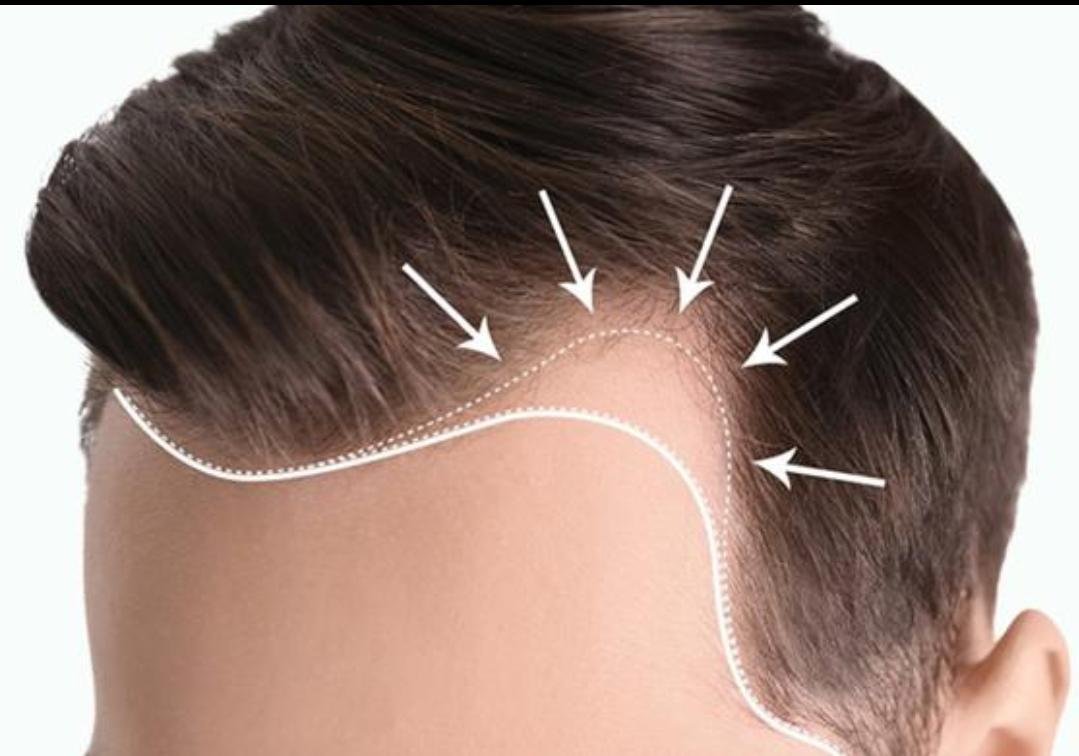
Female-pattern hair loss often produces widening of the part and reduced density over the top while preserving the frontal hairline to varying degrees. Some women have a defined frontal or temporal recession. Traction can affect edges and temples; alopecia areata can create patches; scarring disorders can produce inflammation and loss of follicular openings.
Telogen shedding may follow pregnancy, illness, surgery, rapid weight change, nutritional deficiency, stress or medicine changes. Thyroid and hormonal conditions can contribute in selected patients. These categories can overlap. An online “female transplant package” cannot safely distinguish them.
What medical evaluation may involve
A clinician should ask when loss began, whether it is shedding or gradual thinning, and whether there is itch, pain, scale, pustules or broken hairs. Pregnancy, menstrual and menopausal history, possible androgen symptoms, diet, recent illness, medicines, tight styling and family pattern provide context.
Scalp examination may assess pattern, miniaturisation, inflammation and donor stability. Targeted blood tests or dermatology review may be recommended from the findings; not every patient needs the same panel. Do not self-prescribe iron, hormones or high-dose vitamins because one social-media list labels them “hair nutrients.” Excess treatment can cause harm and delay diagnosis.
Patterns that may support a transplant discussion
A woman with a naturally high or recessed hairline, a stable local scar, selected stable traction loss after tension has stopped, or pattern loss with a demonstrably stable donor zone may be assessed for surgery. The goal should be realistic coverage rather than restoration of childhood density.
Candidate strength also depends on hair calibre, curl, colour contrast, recipient area, future progression, health and willingness to follow long-term care. Cosmetic priority matters: some patients value part-line density, while others want a conservative hairline or scar camouflage.
When surgery should wait or may not fit
Diffuse miniaturisation throughout the back and sides can leave no reliable donor reserve and can make harvesting expose more thinning. Active scarring alopecia, inflammation, infection or alopecia areata may damage new grafts. Sudden shedding or recent postpartum change often needs time and assessment before a permanent redistribution decision.
Unrealistic density expectations, unstable health, ongoing traction, inadequate donor supply or inability to accept shaving and scars may also make surgery unsuitable. A recommendation for medical treatment, camouflage, hair systems or observation is not lesser care when it protects the donor area.
Candidate and evaluation clues
| Finding | What it may mean | Next step |
|---|---|---|
| Stable defined recession or scar | May be transplantable if donor is healthy | Design and donor assessment |
| Widening part with stable donor | Selected pattern-loss cases may be considered | Diagnosis, long-term plan and conservative density |
| Diffuse shedding including donor | Donor may be unreliable or loss may be temporary | Medical evaluation before surgery |
| Pain, scale, pustules or smooth scarred areas | Possible inflammatory or scarring disease | Dermatology-led diagnosis and control |
| Recent childbirth or major illness | Hair cycle may still be changing | Clinical review and time rather than immediate grafting |
Why donor-zone mapping matters more in diffuse loss
FUE and FUT both depend on follicles likely to remain stable. Magnified assessment can look for miniaturisation within the proposed donor. A normal-looking ponytail is not enough. Previous extensions, tight styles, chemical damage and surgery can also affect the apparent supply.
Harvesting too many units can create visible donor thinning, particularly when a woman wears hair tied up or has fine high-contrast hair. Ask how the donor will look at the shortest hairstyle you use and what reserve remains if thinning progresses.
Hairline and density planning for women
A natural female hairline can contain irregular micro- and macro-contours, temporal relationships and fine single hairs at the edge. A ruler-straight dense line may look transplanted. Existing hair direction and styling preferences should guide recipient angles.
When adding grafts among miniaturised native hairs, surgery can cause temporary shock loss and permanent progression remains possible. The plan should explain visual coverage, not promise that every space will be filled. Crown or broad diffuse areas can demand more follicles than the donor safely supplies.
Shaving, scars and recovery
FUE may require broad, partial or window shaving; FUT may hide a linear donor closure beneath longer hair. Neither is scarless. Ask the surgeon to mark what will be shaved and show how the donor will be concealed during healing. Religious, professional and privacy needs should be discussed without embarrassment.
Recipient crusts, redness and swelling settle earlier than growth. Transplanted shafts may shed, and new growth is gradual over months. Work return depends on visibility, job demands and covering. Avoid promising a final result at one month or judging failure during the quiet phase.
Risks and warning signs
Risks include bleeding, infection, anaesthetic reaction, scars, numbness, folliculitis, cysts, poor or uneven growth, unnatural direction, shock loss, donor thinning and future native loss. Transplanting active disease can waste grafts and worsen scarring.
Seek medical assessment before cosmetic booking for sudden patchy loss, scalp pain, pus, heavy scale, loss of follicular openings, eyebrow or body-hair loss or systemic symptoms. After surgery, increasing pain, fever, spreading redness, pus, bleeding or dark tissue needs prompt review.
Cost factors in Pakistan
No fixed procedure price was supplied. Cost changes with diagnosis, recipient area, graft range, FUE or FUT, implantation, operative time, team, facility, medicines and follow-up. A no-shave or limited-shave approach may change time, but the premium should be explained rather than assumed beneficial.
The client-supplied consultation fee is PKR 3,000, subject to confirmation. Medical evaluation, laboratory tests or dermatology care may be separate, as may long-term treatment for native hair. A transparent quote states these items before a transplant deposit.
Questions for a female hair-loss consultation
- What is the diagnosis and how confident are we?
- Is the donor zone stable under magnified assessment?
- Do I need targeted medical or dermatology evaluation first?
- What coverage is realistic with my calibre and donor supply?
- What will be shaved, and what scar may show?
- How will native-hair progression be managed?
- What is included in the quote and long-term review?
A female transplant is successful only when the diagnosis, donor biology and cosmetic design agree. Sometimes the safest and most satisfying answer is treatment first, observation or no surgery.
Practice context supplied by Dr. Saima: Dr. Saima’s website lists hair transplantation in Lahore. The client has not supplied a female-candidate protocol, laboratory panel, medicine plan, standard graft number, technique, outcome guarantee or operation price. Dr. Saima must take the history and examine the scalp and donor zone, and may recommend dermatology, medical or laboratory evaluation before any surgical plan.
Frequently asked questions
Are women good candidates for hair transplant?
Some are. A suitable candidate needs a transplantable diagnosis, realistic goals and a stable donor zone with enough healthy follicles. Diffuse donor thinning can make redistribution unsafe or cosmetically disappointing. Sex alone does not decide candidacy; diagnosis and donor mapping do.
Why might I need blood tests first?
History and examination may suggest iron deficiency, thyroid disease, nutritional issues, hormonal conditions or another contributor. Testing should be targeted by a qualified clinician rather than sold as one universal panel. An abnormal result also needs clinical interpretation before treatment.
Can postpartum hair shedding be transplanted?
Postpartum shedding is often temporary and evolves over months, so early transplantation may be unnecessary and cannot treat the underlying cycle change. Persistent, patterned or severe loss deserves assessment, particularly with scalp symptoms or other health changes.
What if my hair loss is caused by tight hairstyles?
Early traction-related loss may improve when tension stops, while longstanding loss can scar and become permanent. A transplant may be considered only when traction has stopped, the condition is stable and recipient skin and donor supply are suitable.
Can a transplant make thin hair as dense as it was before?
No density can be guaranteed. Surgery redistributes a limited donor supply and cannot recreate every lost follicle. Hair calibre, curl, contrast, recipient area and ongoing loss influence coverage. The goal is usually strategic visual improvement rather than original density.
Will I have to shave my whole head?
Not always. Shaving requirements vary with FUE or FUT, graft number, donor access, hairstyle and clinic protocol. Partial or hidden approaches may be possible in selected cases but can change time and cost. Ask to see exactly which area would be cut or shaved.
How much does a female hair transplant cost in Pakistan?
There is no universal female package. Cost depends on diagnosis, recipient and donor areas, graft estimate, harvest and placement methods, operative time, team, facility, medicines and follow-up. The client-supplied consultation fee is PKR 3,000, subject to confirmation; request an itemised surgical quote after assessment.
Turn an online question into a personal surgical assessment
Record the onset, speed and pattern of loss; pregnancy, delivery and breastfeeding dates; periods and possible hormonal symptoms; diet or weight change; illness, stress, medicines, tight hairstyles and scalp symptoms. Bring laboratory results and previous diagnoses if available, but do not start supplements or stop prescribed medicines solely from online advice.
Related reading and next steps
- PRP versus exosome therapy for hair loss
- Hair-transplant cost in Pakistan
- Hair-transplant recovery timeline
- Hair transplantation service
- PRP hair service
- Eyebrow transplantation service
- Book a private consultation
- About Dr. Saima Waris
- Planning treatment travel to Lahore
Sources and evidence
Medical and regulatory claims were checked against the following professional, government or peer-reviewed sources.
- American Academy of Dermatology: hair-loss diagnosis and treatment
- British Association of Dermatologists: female-pattern hair loss
- 2026 StatPearls review: hair transplantation
- 2023 PubMed international expert consensus: hair-transplant care
- 2025 PubMed review: antiandrogen therapy in female-pattern hair loss
Consultations in Lahore
Two clinic locations, one practice team.
Call or WhatsApp before travelling to confirm the appropriate clinic and current appointment availability.

Medical reviewer
Dr. Saima Waris
MBBS · FCPS (Plastic Surgery) · PMDC 47804-P
Plastic and cosmetic surgeon in Lahore. Articles in this patient-education library are medically reviewed for clinical accuracy, limitations and patient safety.
View Dr. Saima’s profile